
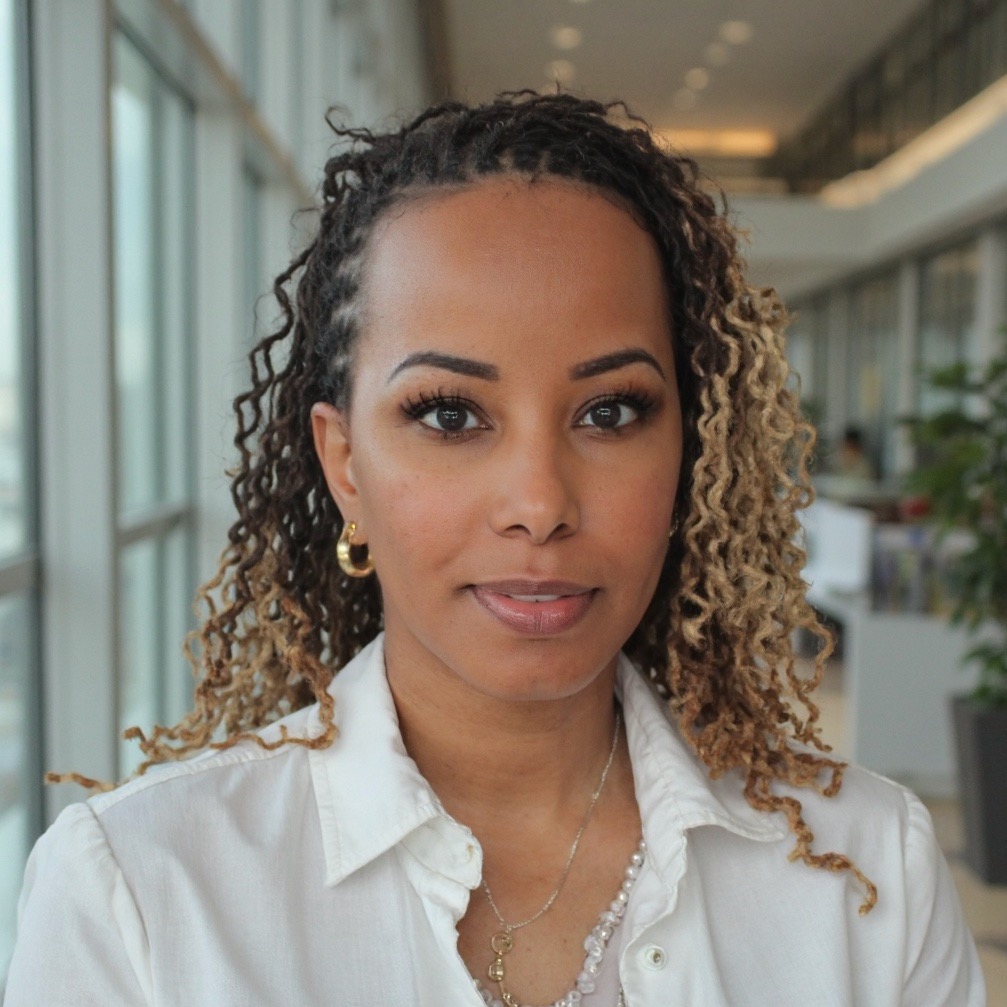
 Samira Malik
Associate Vice President for Development Strategy & Operations, White House Historical Association
What is one advancement services trend, tool, or innovation you’re most excited about right now?
I am particularly excited about the use of artificial intelligence to support and enhance philanthropic strategy. I see tremendous opportunity for AI to strengthen prospect research, identify patterns within donor data, support relationship mapping, improve reporting, and help advancement teams translate information into actionable strategy. For me, the value is not in replacing the expertise or judgment of advancement professionals, but in giving us better tools to ask stronger questions, work more efficiently, and make more informed decisions. As our data environments become increasingly complex, I believe advancement services professionals have an important role to play in determining how AI is used responsibly, strategically, and ethically.
What project or accomplishment are you especially proud of from the past year?
I am especially proud of continuing to expand my leadership beyond traditional advancement operations and positioning the function as a strategic partner in philanthropic decision-making. In my current role as Associate Vice President for Development Strategy & Operations at the White House Historical Association, my portfolio spans development operations, prospect management and research, data and reporting, gift processing, donor communications, stewardship, membership, and philanthropic events. Bringing these functions together requires thinking about how people, processes, technology, and data collectively support fundraising strategy.
Personally, I am also proud to have completed my second master's degree, an M.Ed. in Higher Education Administration from Northeastern University, while working full-time. I am now beginning my Ed.D. journey, where I hope to continue exploring the intersection of philanthropy, governance, equity, and institutional leadership. Both professionally and academically, this past year has reinforced my belief that operational strength drives mission impact.
If you could give one piece of advice to someone new to advancement services, what would it be?
Be prepared to pivot. Advancement services touches nearly every aspect of a development operation, which means priorities can change quickly. A new campaign strategy, leadership request, donor opportunity, system issue, or event can completely reshape the day you thought you were going to have.
The key is learning how to be flexible without losing sight of standards, accuracy, or the larger objective. Understand the "why" behind the work, not simply the process. When you understand how your work contributes to fundraising and institutional strategy, you can adapt much more effectively when circumstances change.
What’s the best professional lesson you’ve learned from a colleague, mentor, or team member?
One of the most important lessons I have learned is that leadership is not about having every answer; it is about creating an environment where people can contribute their expertise, ask questions, challenge assumptions, and solve problems together.
Some of my greatest professional learning has come from listening to the people closest to the work. I believe strongly in setting high expectations while also giving people the trust and space to meet them. Excellence and empathy are not competing leadership principles—you can expect both accountability and humanity.
What’s your favorite way to recharge after a busy week at work?
Movement is how I recharge. I work out six days a week and intentionally protect that time because I have learned that if I do not make taking care of myself a priority, time will happily escape me. Whether I am running, strength training, or simply getting in a good workout, that time allows me to reset mentally as much as physically.
My schedule can be demanding, so fitness is less about finding spare time and more about making a commitment to myself. I am a runner and have completed seven full marathons and more than 20 half marathons, and I recently completed HYROX DC. The discipline required in training carries over into how I approach my professional and academic life.
What’s your favorite way to recharge after a busy week at a conference?
Come home and unplug. Conferences are wonderful because of the learning, conversations, and connections, but I am usually ready for quiet afterward. I appreciate having some uninterrupted time at home to decompress, reflect on what I learned, and simply enjoy not having anywhere else I need to be.
What’s a fun fact about you that most people in the aasp community probably don’t know?
I have a goal of running a race in all 50 states, and I am more than halfway there! Running has taken me to places I might not otherwise have visited and has become one of the ways I combine my love of travel, fitness, and challenging myself.
I am also the very proud mother of an adult son who was a Division I football player and is now completing his master's degree in computer science while working in cybersecurity. Watching him build his own life and career is one of my greatest joys.
If your work style had a theme song, what would it be?
"Lovely Day" by Bill Withers.
My approach to work is grounded in perspective. I try to remain flexible, work well with different personalities, and not take workplace challenges personally. There will always be difficult days, competing priorities, and unexpected changes, but I try to focus on what I can contribute to moving the work forward.
I take the work seriously, but I try not to take myself too seriously. Maintaining perspective, treating people well, and remembering that tomorrow gives us another opportunity to figure it out are important parts of how I work.
If you could instantly master any skill — professional or personal — what would it be and why?
I would love to instantly master another language. Language provides access not only to communication but to culture, history, and different ways of understanding the world. As someone who values lifelong learning and enjoys traveling, being truly fluent in another language would allow me to connect with people and communities in a much deeper way.
What has been the biggest benefit of being part of the aasp community?
The greatest benefit has been access to a community of professionals who understand the complexity and importance of advancement services. Our work is often happening behind the scenes, but strong advancement operations are foundational to successful philanthropy.
AASP provides a space where professionals can exchange ideas, learn from one another, benchmark practices, and talk candidly about challenges that are often very specific to our work. I especially value being able to connect with colleagues across institutions and sectors and see the different ways organizations are approaching similar questions around data, technology, talent, donor engagement, and operations.